TL;DR: Australian employers need HR templates at every stage of employment: contracts and onboarding forms when people start, policies while they work, review and warning letters when performance slips, and termination letters and deeds when employment ends. Templates save drafting time, but each one must match current Fair Work rules, your award, and your state’s laws before you use it.
Key takeaways
- An employment contract cannot provide for less than the National Employment Standards, an award, or an enterprise agreement.
- Every new employee must receive the Fair Work Information Statement before, or as soon as possible after, they start.
- Employers must keep time and wages records for 7 years, including copies of leave cash-out and flexibility agreements.
- Casual conversion changed to the “employee choice” pathway on 26 August 2024, so older casual templates need checking.
- A template is only a starting point, so check every document against your award and state law before you send it.
What is in the HR template bundle?
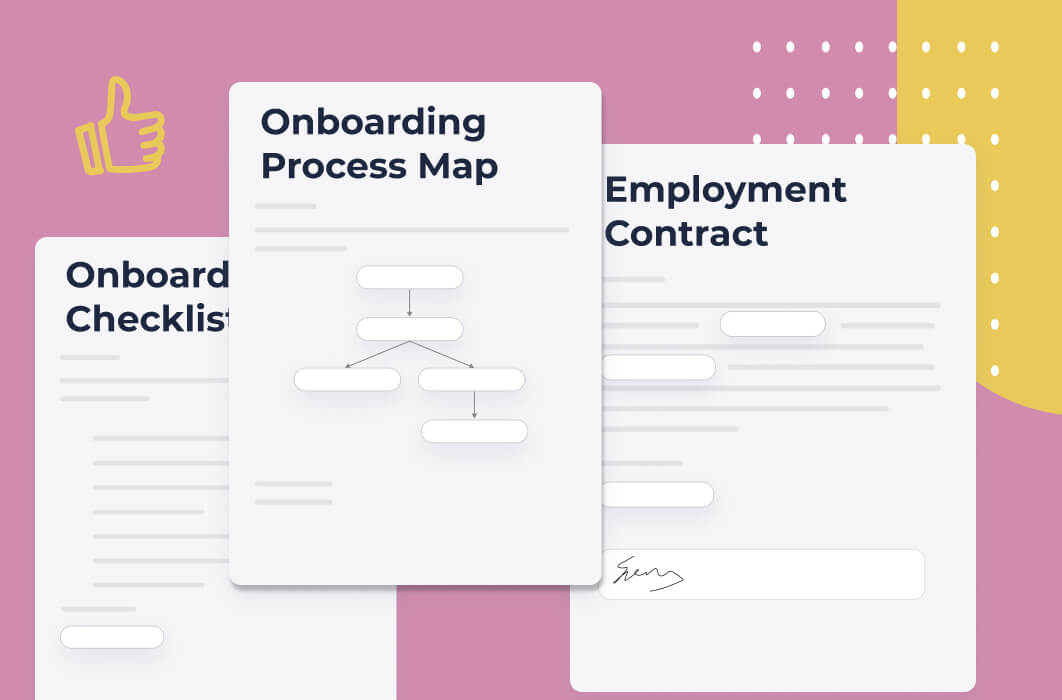
The Worknice HR template bundle is a free download of over 60 Australian HR templates. It covers employment contracts and contractor agreements, workplace policies, onboarding documents, probation and performance review forms, performance management and misconduct letters, redundancy and offboarding letters, and deeds and agreements. Download it and adapt each template to your organisation.
The bundle at a glance
- Employment contracts and contractor agreements (11)
- Workplace policies (11)
- Onboarding documents (8)
- Probation and performance review forms (6)
- Performance management letters (6)
- Misconduct, redundancy, and offboarding letters (8)
- Deeds and agreements (11)
Over 60 templates!
>> Click here for the full list <<
Get the bundle via email
Which HR templates does an Australian employer need?
An Australian employer needs templates for each stage of the employment relationship: employment contracts and new starter forms, workplace policies, probation and performance reviews, warning and termination letters, and agreements such as leave cash-outs and deeds of release. Each stage carries legal obligations, so a written template helps managers apply the same steps every time.
The reason is consistency rather than paperwork for its own sake. A mid-sized organisation might have dozens of managers hiring, reviewing, and occasionally dismissing people. Without shared templates, each manager drafts their own letter, and the organisation ends up with documents that promise different things and miss different steps.
Consider a warning letter drafted from scratch by a manager in a hurry. It may not say what the problem is, what improvement is expected, or what happens next. Later, if the employee is dismissed and challenges it, that gap is exactly what gets examined. A good template builds those steps into the document so they are not left to memory.
For the full list of what the download contains, see the HR template bundle inclusions.
Why does every employment relationship start with a written contract?
A written employment contract records the role, pay, hours, and conditions both sides agreed, and it gives managers one reference point when questions arise later. In Australia, a contract cannot provide for less than the National Employment Standards, the relevant award, or an enterprise agreement, so it sits on top of those minimums rather than replacing them.
The Fair Work Ombudsman makes this point directly: an employment contract cannot provide for less than the NES or the relevant award or agreement. So a contract template is only as good as its fit with the instrument that covers the role. A contract for a senior manager on an annual salary looks quite different from one for an award-covered casual.
Contractor agreements need even more care, because the legal test has changed. For constitutionally covered businesses, such as most companies with “Pty Ltd” in their name, a “whole of relationship” test applies from 26 August 2024. Under that test, how the work is actually performed in practice matters, not just what the contract says. As a result, a contractor agreement cannot turn an employee into a contractor by labelling them one. For more on the documents themselves, see the sample employment contracts bundle.
Which documents must a new employee receive?
Every new employee must receive the Fair Work Information Statement before, or as soon as possible after, they start. Casual employees also receive the Casual Employment Information Statement, and employees on a new fixed term contract receive the Fixed Term Contract Information Statement. Employers also collect a TFN declaration and offer a choice of super fund.
Two of these documents come from government agencies, and both change. The Fair Work Ombudsman publishes the current information statements on its website, and employers can give them by email or as a link. Because they are updated, download a fresh copy rather than relying on one saved inside an old template pack.
The tax file number declaration is a sharper example. According to the ATO, the downloadable paper TFN declaration form is no longer available. Instead, payers order paper copies from the ATO, and the ATO asks them to order only what they need because the form may be updated. Many new employees can also complete the declaration online.
The super choice form is also an ATO document with its own rules. The ATO says employers must fill in their default fund details before giving the form to an employee, and must keep completed forms for 5 years. For the full new starter sequence, see the employee onboarding checklist template.
Which workplace policies matter most?
The policies that matter most are the ones tied to legal duties: work health and safety, bullying, discrimination and harassment, and any rules about monitoring staff or handling flexible working requests. Policies on IT use, social media, leave, vehicles, and working from home then set clear expectations, so managers handle the same situation the same way.
Sexual harassment is the clearest case of a policy backed by a legal duty. The Fair Work Ombudsman says employers must take reasonable measures to eliminate workplace sexual harassment, as far as possible. It also points employers to the positive duty in the Sex Discrimination Act, and recommends a written policy, a procedure for responding to reports, and regular reviews.
Work health and safety law also varies depending on where your sites are. According to Safe Work Australia, the model WHS laws have been implemented in every jurisdiction except Victoria, which has its own legislation. So a WHS policy written for one state may need adjusting for a Victorian site.
Flexible working requests come with fixed rules and deadlines as well. Under the NES, eligible employees with at least 12 months of service can request flexible working arrangements, and employers must respond in writing within 21 days. A policy that sets out who handles requests helps managers meet that deadline. The sample bullying, discrimination and harassment policy covers the first of these in detail.
Why do probation, performance, and termination need templates?
Probation, performance, and termination need templates because these are the moments most likely to end in a dispute. When deciding whether a dismissal was unfair, the Fair Work Commission considers whether there was a valid reason, whether the employee had a chance to respond, and whether an underperforming employee had been warned.
Templates help managers create that record as they go. A probation review form documents expectations early in the relationship. Then a performance improvement plan sets out what must change, and a warning letter confirms the conversation in writing. Each step shows the employee knew where they stood.
Timing matters as much as the content of the letter. According to the Fair Work Ombudsman, an employee can generally apply for unfair dismissal once they have worked for at least 6 months, or 12 months for a small business. Probation periods are set by the employer and often run from 3 to 6 months. Even so, an employee who does not pass probation is still entitled to notice and to their unused annual leave.
At the end of employment, the NES requires written notice of termination for most employees, although casuals are among the exceptions. In addition, the Fair Work Ombudsman says that serious misconduct, such as theft, fraud, or assault, means the employer is not required to give notice. A template for each type of termination keeps those differences clear.
What records must employers keep, and for how long?
Employers must keep time and wages records for 7 years, according to the Fair Work Ombudsman. Those records include pay, hours, leave balances, super contributions, and how employment ended. Some agreements must also be kept on file, including leave cash-out agreements, agreements to take annual leave in advance under many awards, and individual flexibility arrangements.
This is the point where templates and record keeping meet. A cash-out agreement, for example, is not just a form to sign. Under most awards, the Fair Work Ombudsman says an employee can cash out no more than 2 weeks of annual leave in any 12 month period. Each cash-out also needs a signed written agreement, and the employer must keep it.
Records must also be readily accessible to a Fair Work Inspector, and they cannot be changed except to correct an error. As a result, a signed agreement sitting in a manager’s inbox is a weak record. Wherever templates are stored, the signed versions need a reliable home where they can be found years later.
How do you keep HR templates up to date?
Keep HR templates current by reviewing them whenever workplace law, your award, or your enterprise agreement changes, and at least once a year otherwise. Replace government forms with fresh copies from the source, check casual and contractor templates against the 2024 changes, and record who approved each version and when.
The 2024 changes to casual employment show why this matters. From 26 August 2024, the NES pathway for casuals to become permanent changed from “casual conversion” to “employee choice”. Under the new pathway, an eligible casual can notify the employer in writing, and the employer must respond in writing within 21 days. A casual conversion notice written before that date reflects the old rules.
A simple review routine works for most organisations, whatever their size:
- Owner: give every template a named owner in HR or legal, who answers for it.
- Version: put a version date in the footer, so out-of-date copies are easy to spot.
- Triggers: review after award variations, legislative changes, and enterprise agreement approvals.
- Advice: have contracts, deeds of release, and termination letters checked by an employment lawyer.
When is a template bundle not enough?
Ditch the paper and pdf forms
These document, plus 100’s more, are available and ready as smart docs for you to edit and deploy digitally to new hires and existing employees. Track signature acceptance, automatically follow up non-compliance and more!
A template bundle stops being enough when you cannot easily tell who has signed which contract, acknowledged which policy, or returned which form. At that point, the effort moves from drafting documents to chasing and filing them. HR software assigns documents to people, tracks what is outstanding, and keeps the signed record together.
For an organisation hiring a few people a year, a well-kept folder of templates is genuinely sufficient.
However, at 200 employees or more, version control and follow-up tend to break first. Then an expired policy goes out, or nobody can find a signed agreement when it matters.
Worknice is one option for Australian organisations of 200 to 5,000 employees that want contracts, forms, and policy acknowledgements assigned and tracked in one HR system. It integrates with payroll rather than replacing it, so an organisation that wants combined HR and payroll may prefer an all-in-one platform. For the criteria to weigh, see what Australian HR compliance software does.
Why are we giving it away for free?
Worknice is a software platform that helps you focus your time and energy on people, rather than process. This downloadable template is a pdf or editable document. So while the content is great, it does not come to life with technology features like automations, workflows, auto-updates, electronic sign-offs, integration and more.
Frequently asked questions
What HR templates does a small to mid-sized business need?
Most businesses need employment contracts for each type of employee, contractor agreements if they engage contractors, new starter forms, and core policies on safety, harassment, and conduct. They also need probation review forms, performance improvement plans, warning letters, termination letters, and agreements for leave cash-outs and individual flexibility arrangements.
Are free HR templates legally compliant in Australia?
A free HR template is a starting point, not a guarantee of compliance. Whether a document complies depends on the award or enterprise agreement that covers the employee, your state’s laws, and changes since the template was written. Check every template against current Fair Work guidance, and get legal advice for contracts and terminations.
Do I need a written employment contract in Australia?
According to the Fair Work Ombudsman, an employment contract can be in writing or verbal. A written contract is still the safer choice, because it records the agreed role, pay, hours, and conditions. Either way, it cannot provide for less than the National Employment Standards, the relevant award, or an enterprise agreement.
How often should HR policies be reviewed?
Review HR policies at least once a year, and straight away when workplace law, your award, or your enterprise agreement changes. The Fair Work Ombudsman recommends reviewing sexual harassment policies regularly so they stay current with the law and best practice. Record the review date and the approver on each policy.
How long do employers have to keep employee records in Australia?
Employers must keep time and wages records for 7 years, according to the Fair Work Ombudsman. These include pay, hours, leave, super contributions, and termination details. Completed super choice forms must be kept for 5 years, according to the ATO. Records must be accessible to a Fair Work Inspector on request.
Related reading
- Sample independent contractor agreement templates
- Sample flexible work arrangements policy
- What makes an HRIS Fair Work compliant
Sources
Fair Work Ombudsman: starting employment
- Fair Work Ombudsman. “About employment contracts.” Last updated 23 October 2025. Retrieved 8 October 2026. https://www.fairwork.gov.au/employment-conditions/employment-contracts/about-employment-contracts
- Fair Work Ombudsman. “Fair Work Information Statement.” Last updated 7 October 2026. Retrieved 8 October 2026. https://www.fairwork.gov.au/employment-conditions/information-statements/fair-work-information-statement
- Fair Work Ombudsman. “Independent contractors.” Last updated 24 October 2025. Retrieved 8 October 2026. https://www.fairwork.gov.au/find-help-for/independent-contractors
- Fair Work Ombudsman. “Becoming a permanent employee.” Last updated 7 August 2026. Retrieved 8 October 2026. https://www.fairwork.gov.au/starting-employment/types-of-employees/casual-part-time-and-full-time/casual-employees/becoming-a-permanent-employee
- Fair Work Ombudsman. “Probation.” Last updated 14 August 2026. Retrieved 8 October 2026. https://www.fairwork.gov.au/starting-employment/probation
Fair Work Ombudsman: during and ending employment
- Fair Work Ombudsman. “Dismissal.” Last updated 28 August 2026. Retrieved 8 October 2026. https://www.fairwork.gov.au/ending-employment/notice-and-final-pay
- Fair Work Ombudsman. “Preventing workplace sexual harassment.” Last updated 23 September 2026. Retrieved 8 October 2026. https://www.fairwork.gov.au/employment-conditions/workplace-sexual-harassment/preventing-workplace-sexual-harassment
- Fair Work Ombudsman. “Flexible working arrangements.” Last updated 10 August 2026. Retrieved 8 October 2026. https://www.fairwork.gov.au/employment-conditions/flexibility-in-the-workplace/flexible-working-arrangements
- Fair Work Ombudsman. “Unfair dismissal.” Last updated 8 October 2026. Retrieved 8 October 2026. https://www.fairwork.gov.au/ending-employment/unfair-dismissal
- Fair Work Ombudsman. “Record-keeping.” Last updated 28 August 2026. Retrieved 8 October 2026. https://www.fairwork.gov.au/pay-and-wages/paying-wages/record-keeping
- Fair Work Ombudsman. “Cashing out annual leave.” Last updated 7 August 2026. Retrieved 8 October 2026. https://www.fairwork.gov.au/leave/annual-leave/cashing-out-annual-leave
Safe Work Australia and the ATO
- Safe Work Australia. “Model WHS laws.” Retrieved 8 October 2026. https://www.safeworkaustralia.gov.au/law-and-regulation/model-whs-laws
- Australian Taxation Office. “Paper TFN declaration form for payees.” Last updated 28 May 2026. Retrieved 8 October 2026. https://www.ato.gov.au/forms-and-instructions/tfn-declaration/paper-tfn-declaration-form-for-payees
- Australian Taxation Office. “Superannuation standard choice form.” Last updated 27 June 2026. Retrieved 8 October 2026. https://www.ato.gov.au/forms-and-instructions/superannuation-standard-choice-form
Stay in the loop
Don’t miss out! Join our large community of HR professionals and business owners. By keeping in the loop, we will send you every new downloadable template and editorial the moment we create them.