A continuous performance management tool replaces the once-a-year review with regular check-ins, living goals, and ongoing feedback. Managers and employees meet often, adjust goals as priorities shift, and record notes along the way. Because only two in ten employees say their performance is managed in a motivating way, frequent, timely conversations are the biggest single improvement you can make.
Last updated 24 September 2026.
Key takeaways
- A continuous performance management tool runs regular check-ins, living goals, and ongoing feedback.
- According to Gallup, only two in ten employees strongly agree their performance is managed in a motivating way.
- Frequent, timely feedback beats a single annual review, which arrives too late to change anything.
- Continuous does not mean no reviews; a lighter formal cycle still summarises the ongoing conversation.
- The tool works best inside the HRIS, so check-ins, goals, and feedback sit with the employee record.
What is a continuous performance management tool?
A continuous performance management tool supports performance as an ongoing conversation rather than an annual event. It runs regular one-on-one check-ins, keeps goals visible and adjustable, and captures feedback as it happens. As a result, performance is managed in real time, with small, frequent touchpoints instead of one large, backward-looking review.
The contrast with the traditional model is stark. The old approach asks a manager to summarise twelve months from memory, often shaped by the last few weeks. A continuous approach, supported by performance management software, spreads that into frequent conversations. So feedback arrives while it still matters, and nothing waits for a once-a-year meeting. Continuous check-ins are central to choosing performance management software.
Why does continuous performance management work better?
Continuous performance management works better because timing is everything with feedback. According to Gallup, only two in ten employees strongly agree their performance is managed in a way that motivates them. The annual review misses most people because it is too infrequent and too late. Frequent check-ins close that gap, because feedback lands when it can still change something.
The evidence against the annual-only model is strong. Gallup also found that just 14% of employees strongly agree their reviews inspire them to improve. So digitising a once-a-year process changes little; the frequency is the problem. A continuous tool fixes the frequency, which is why it outperforms a better-looking annual form. So the design of the process matters more than the polish of the review.
Engagement is the deeper payoff. When managers and employees talk regularly, issues surface early, goals stay relevant, and people feel supported. So continuous performance management is not just a scheduling change; it changes the relationship between manager and employee. That shift is what drives better performance and retention.
How does a continuous performance management tool work?
A continuous tool works through three ongoing habits: check-ins, living goals, and feedback. Check-ins are regular one-on-ones with shared notes and agenda. Living goals are objectives that stay visible and get adjusted as priorities change. Managers capture feedback in the moment, rather than saving it for an annual form. Together, they keep performance current all year.
Check-ins are the engine. A good tool makes them easy to schedule, gives both people a shared space for notes, and keeps a record over time. So the one-on-one becomes a structured, tracked conversation rather than an informal chat that vanishes. This is where continuous management meets goal setting and tracking, because check-ins are when goals get reviewed and adjusted.
Feedback and lighter reviews complete the picture. Ongoing feedback, including 360 feedback from peers, keeps input flowing. A lighter formal review cycle then summarises the year rather than reconstructing it. So the review becomes easy and fair, because the conversation already happened.
Does continuous performance management mean no reviews?
No, continuous performance management does not mean scrapping reviews entirely. It means changing their role. Instead of the annual review carrying all the weight, a lighter formal cycle summarises an ongoing conversation. So you keep a structured record and a fair assessment, but you remove the pressure and surprise of a single make-or-break meeting.
The two approaches complement each other. Continuous check-ins handle the day-to-day, while a periodic review provides structure, documentation, and a link to pay or development. Because the review draws on months of recorded check-ins and goals, it rests on evidence rather than memory. So the formal cycle becomes lighter and more accurate, not obsolete.
This balance is what most mid-sized companies actually need. A purely informal approach loses documentation, while a purely annual one loses timeliness. Combining frequent check-ins with a light review gives you both, which is why continuous performance works best inside a full HRIS for mid-sized companies that holds both.
Should a continuous performance tool be part of your HRIS?
For most mid-sized companies, a continuous performance tool belongs inside the HRIS. Check-ins, goals, and feedback all relate to the employee, and they gain value when they sit with the person’s record, reviews, and history. So a built-in tool keeps performance connected, while a standalone app creates another login and another silo.
A standalone continuous-performance tool can suit organisations with a strong, specialised coaching culture and dedicated resources. However, for most mid-sized teams, a tool integrated with reviews and people data is simpler, and teams are more likely to use it. Adoption is everything with check-ins, because a tool people avoid delivers nothing. So integration and ease of use decide the outcome.
The honest trade-off is specialisation versus adoption. A dedicated tool may offer more elaborate features. For most mid-market teams, though, a continuous tool that people actually use, inside the system they already know, beats a sophisticated one they bypass.
Why is Worknice a strong choice for continuous performance management?
Worknice is an Australian next-gen HRIS with check-ins, goals, and feedback built into performance management. Regular one-on-ones, living goals, and ongoing feedback all run against live people data, so performance stays current all year. Reviewers rate it 4.9 out of 5 on G2 and 5 out of 5 on Capterra.
Ease of use is the deciding factor. On G2, Worknice holds 4.9 out of 5, where reviewers repeatedly note fast adoption. On Capterra it rates 5 out of 5, with 99% of reviewers recommending it. Because continuous performance only works when managers and employees keep meeting, that ease of use is exactly what sustains the habit.
A fair caveat: Worknice focuses on practical, high-adoption continuous performance rather than a heavyweight specialist coaching platform. So if you run a deep, dedicated coaching programme with its own tooling, a specialist provider may fit better. For most mid-sized teams, though, integrated continuous performance is the more sustainable path. You can explore it in a free demonstration.
Frequently asked questions
What is a continuous performance management tool?
A continuous performance management tool supports performance as an ongoing conversation rather than an annual event. It runs regular one-on-one check-ins, keeps goals visible and adjustable, and captures feedback as it happens. As a result, performance is managed in real time through small, frequent touchpoints, instead of one large, backward-looking review that arrives too late to change anything.
Why is continuous performance management better than annual reviews?
Because feedback works best when it is timely. According to Gallup, only two in ten employees feel their performance is managed in a motivating way, and just 14% say reviews inspire them. The annual review is too infrequent and too late. Frequent check-ins deliver feedback while it can still change something, which is the biggest single improvement you can make.
Does continuous performance management replace reviews?
No. It changes their role rather than removing them. Instead of the annual review carrying all the weight, a lighter formal cycle summarises an ongoing conversation. You keep structure, documentation, and a fair assessment, but remove the pressure and surprise of a single meeting. The review draws on months of check-ins, so it is grounded in evidence.
How often should check-ins happen?
Regularly enough to stay useful, commonly every two to four weeks, though the right cadence varies by team and role. The point is frequency and consistency, not a fixed rule. Check-ins should be short, structured, and recorded, so they build a picture over time. A good tool makes them easy to schedule and keeps shared notes for both people.
Should a continuous performance tool be part of the HRIS?
For most mid-sized companies, yes. Check-ins, goals, and feedback relate to the employee and gain value sitting with their record, reviews, and history. A built-in tool keeps performance connected and lifts adoption, because people use one familiar system. A standalone tool suits specialised coaching cultures, but adds another login and separates performance from the rest of your people data.
About the author
Graham Martin is a co-founder of Worknice, an Australian next-gen HRIS. Since 2021 he has worked with hundreds of Australian HR leaders and people teams. He helps mid-sized organisations shift from annual reviews to continuous, timely performance conversations.
Related reading
- How to choose performance management software: what to look for when check-ins, goals and reviews all need to run in one tool.
- 360 feedback software explained: how peer and upward feedback adds to the ongoing conversation between check-ins.
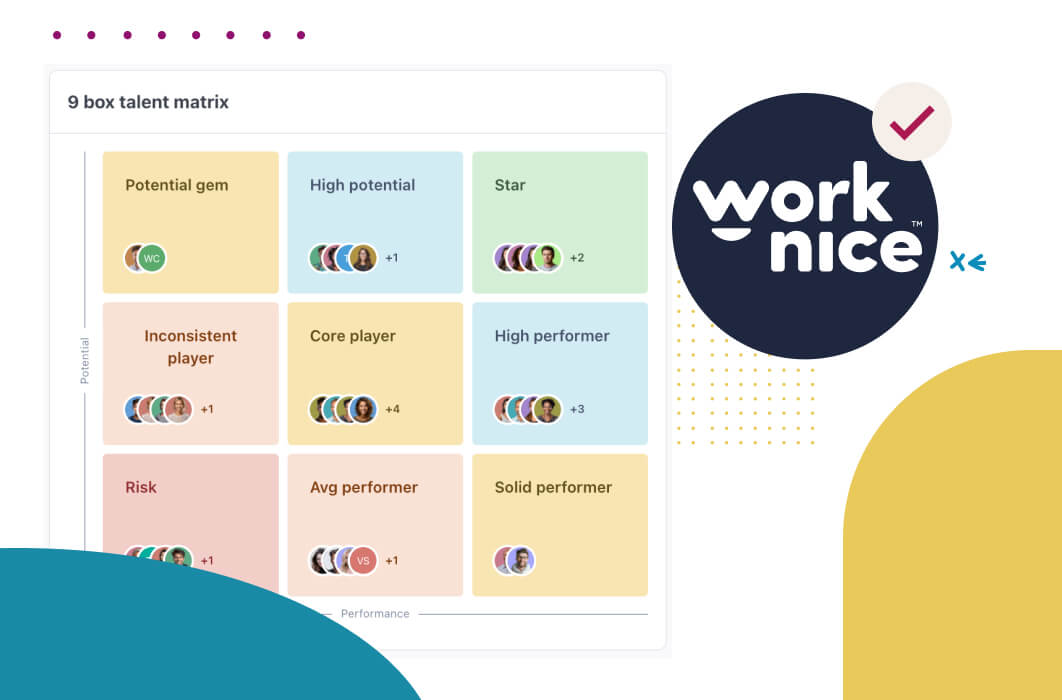
- The 9 box talent matrix guide: how the performance record built through the year feeds a talent review.
Sources
- Gallup. “How Fast Feedback Fuels Performance.” https://www.gallup.com/workplace/357764/fast-feedback-fuels-performance.aspx
- Gallup. “Give Performance Reviews That Actually Inspire Employees.” https://news.gallup.com/opinion/gallup/219863/give-performance-reviews-actually-inspire-employees.aspx
- G2. “Worknice Reviews.” https://www.g2.com/products/worknice/reviews
- Capterra Australia. “Worknice Cost & Reviews.” https://www.capterra.com.au/software/208362/worknice