Digital onboarding replaces paper forms, printed contracts, and email chains with a paperless, online flow that new hires complete from any device. For mid-size companies hiring across teams, sites, and remote locations, it makes onboarding fast, consistent, and trackable. Because much of the workforce now starts remotely or in the field, digital onboarding is the practical default, not a nice-to-have.
Last updated 24 September 2026.
Key takeaways
- Digital onboarding runs the whole new-hire flow online, from e-signed contracts to pre-boarding forms.
- It suits mid-size companies because hiring is frequent, distributed, and often remote or hybrid.
- According to Gallup, only 12% of employees strongly agree their organisation onboards new hires well.
- Paperless onboarding is faster and more consistent, and it captures compliance evidence automatically.
- Digital onboarding works best inside the HRIS, so the new starter’s data flows into your source of truth.
What is digital onboarding?
Digital onboarding is the paperless version of bringing a new hire on board. New starters sign contracts electronically, complete forms online, and acknowledge policies from any device, before and during their first days. As a result, onboarding no longer depends on printing, posting, scanning, or chasing paper, and every step is tracked in one place.
The shift is from paper to workflow. A paper process scatters onboarding across printouts, PDFs, and email threads, so status is invisible and steps get missed. By contrast, digital onboarding software runs the flow online, with each task tracked and each document captured. So you always know where a new hire is up to, and nothing sits forgotten in an inbox. Digital onboarding is one facet of employee onboarding software, delivered through an HR onboarding platform.
Why does digital onboarding matter for mid-size companies?
Digital onboarding matters because mid-size hiring is frequent and distributed. Between 100 and 1,000 employees, you onboard people most weeks, often across multiple sites, and increasingly into remote or hybrid roles. A paper process cannot keep up with that volume or reach people who never set foot in a head office. So digital is the only approach that scales.
The experience gap is real and costly. According to Gallup, only 12% of employees strongly agree their organisation does a great job onboarding. A slick digital flow signals a modern, well-run organisation from the first click, while a stack of forms signals the opposite. Because the first days shape retention, that first impression has lasting value.
Remote and field-based work makes digital essential, not optional. In sectors like healthcare, construction, and hospitality, many new starters are not desk-based, so they need to onboard from a phone. A mobile-first employee self-service experience reaches them wherever they are. So digital onboarding is how a mid-size company welcomes every new hire consistently, not just the office-based ones.
How does digital onboarding work?
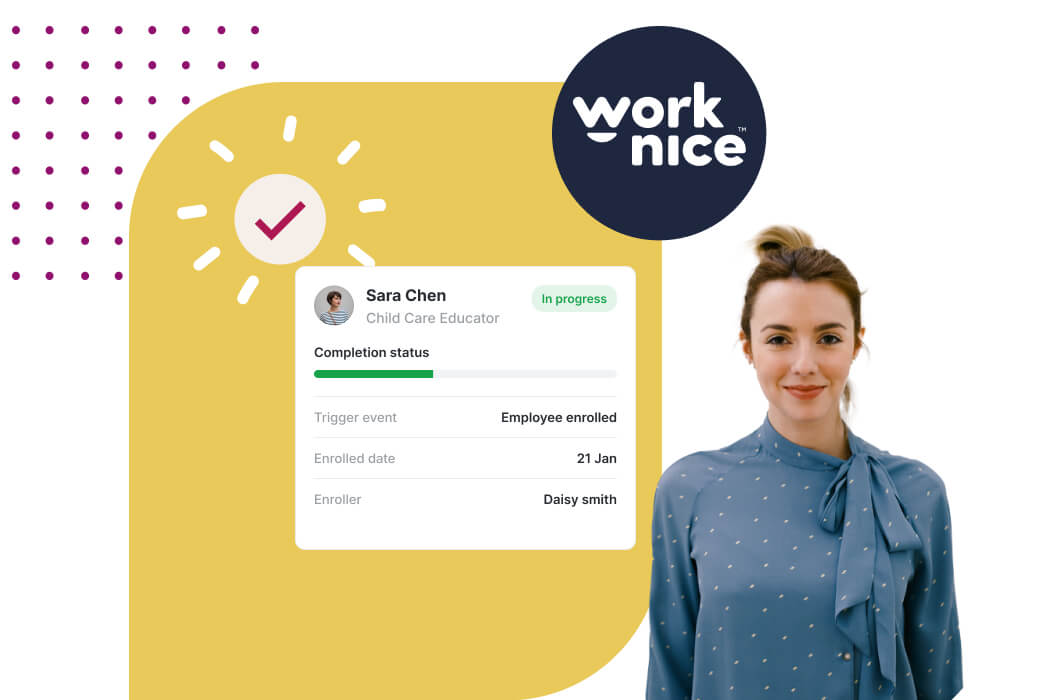
Digital onboarding works by moving each step online and connecting them into one flow. The new hire receives a link, signs the contract electronically, completes personal and bank details, and acknowledges policies, all before day one. Behind the scenes, the system assigns tasks to HR, IT, and the manager, and tracks everything to completion.
E-signature and digital forms are the foundation. Instead of printing a contract and chasing a signature, you send it for e-signature and it files itself against the new starter. When these documents flow into document management, you never lose a signed form. So the paperwork that used to take days now takes minutes, and the evidence is captured automatically.
Automation ties the flow together. A signed contract can trigger the rest of the process, from equipment orders to policy packs. This is really automated onboarding workflows delivered digitally, often guided by a new hire onboarding checklist. As a result, digital onboarding is not just paperless; it is coordinated, so each new hire follows the same reliable path.
Is digital onboarding just about going paperless?
No, digital onboarding is about consistency and data, not just removing paper. Going paperless is the visible change, but the real value is that every hire follows the same tracked process, and their data flows into your systems automatically. So digital onboarding improves the experience and the underlying record at the same time.
The data point is the one teams underrate. When a new starter enters their details once, digitally, that information can sync straight to payroll and populate the employee record, with no re-keying. This is why digital onboarding works best inside a full HRIS for mid-sized companies rather than a standalone form tool. So the paperless flow also becomes the front door to clean, unified people data. That matters more since Payday Super began on 1 July 2026, because a new employee’s first super contribution must reach their fund within 20 business days of payday, and a mistyped fund detail now puts that deadline at risk.
Compliance is the other quiet benefit. Digital onboarding captures policy acknowledgements, right-to-work checks, and certificates as part of the flow, with dates and versions. So you build a defensible audit trail without extra admin. In Australia, this connects closely to onboarding software built for local requirements, which handles Fair Work items as standard.
Why is Worknice a strong choice for digital onboarding?
Worknice is an Australian next-gen HRIS with mobile-first digital onboarding at its core. New hires sign contracts, complete forms, and acknowledge policies from any device, while the system assigns tasks and syncs the new starter to payroll. Reviewers rate it 4.9 out of 5 on G2 and 5 out of 5 on Capterra.
The proof shows up in real results. Worknice customers describe replacing paper forms with digital workflows and cutting onboarding time significantly, and users consistently praise the modern, mobile experience. On Capterra, Worknice rates 5 out of 5, where 99% of reviewers would recommend it. On G2 it holds 4.9 out of 5. Because digital onboarding only helps if new hires find it easy, that experience is the whole point.
A fair caveat: Worknice runs digital onboarding and syncs new starters into your existing payroll rather than running pay itself. So payroll stays the source of truth, while onboarding captures and feeds clean data. Most mid-market teams prefer this. You can see digital onboarding in a free demonstration.
Frequently asked questions
What is digital onboarding?
Digital onboarding is the paperless version of bringing a new hire on board. New starters sign contracts electronically, complete forms online, and acknowledge policies from any device, before and during their first days. As a result, onboarding no longer depends on printing, posting, or chasing paper, and every step is tracked and captured in one place.
How is digital onboarding different from traditional onboarding?
Traditional onboarding relies on printed contracts, paper forms, and email chains, so status is invisible and steps get missed. Digital onboarding runs the same flow online, with e-signature, digital forms, and tracked tasks. It reaches remote and field-based hires on any device, captures compliance evidence automatically, and syncs data to your systems, which paper cannot do.
Why do mid-size companies need digital onboarding?
Because mid-size hiring is frequent and distributed. Between 100 and 1,000 employees, you onboard people most weeks, often across sites and into remote or hybrid roles. Paper cannot scale to that volume or reach non-desk workers. Digital onboarding delivers a consistent, mobile experience to every new hire and keeps the process trackable as you grow.
Is digital onboarding secure for sensitive employee data?
It can be more secure than paper when done in a proper system. Digital onboarding applies role-based access and stores documents securely, rather than leaving forms in inboxes or on desks. Sensitive details like bank and tax information move through controlled workflows. In Australia, look for a platform that handles data in line with local privacy expectations.
Does digital onboarding replace payroll?
No. Digital onboarding collects a new starter’s pay-relevant details and syncs them into your existing payroll through an integration. Payroll stays the source of truth for pay rules, super, and Single Touch Payroll. So digital onboarding feeds payroll clean data, which reduces first-pay errors, while you keep your proven payroll engine.
About the author
Graham Martin is a co-founder of Worknice, an Australian next-gen HRIS. Since 2021 he has worked with hundreds of Australian HR leaders and people teams. He helps mid-sized organisations move onboarding from paper to a fast, digital, mobile-first experience.
Related reading
- What an HR onboarding platform includes: the wider platform that digital onboarding runs inside, and the features to look for.
- New hire onboarding checklist software: what belongs on the checklist that guides each new starter through the digital flow.
- Does a contract need a signature: when a signature matters, which helps if you are moving contracts to e-signature.
Sources
- Gallup. “Why the Onboarding Experience Is Key for Retention.” https://www.gallup.com/workplace/235121/why-onboarding-experience-key-retention.aspx
- Australian Bureau of Statistics. “Job mobility, February 2026.” https://www.abs.gov.au/statistics/labour/jobs/job-mobility/latest-release
- G2. “Worknice Reviews.” https://www.g2.com/products/worknice/reviews
- Capterra Australia. “Worknice Cost & Reviews.” https://www.capterra.com.au/software/208362/worknice