360 feedback software gathers input on an employee from several sources, their manager, peers, direct reports, and themselves, for a fuller, fairer view than a single manager’s opinion. It suits mid-size companies once teams are large enough that one manager cannot see everything. Used well, it supports development. Used badly, it can feel like a popularity contest, so design matters.
Last updated 24 September 2026.
Key takeaways
- 360 feedback gathers input from managers, peers, direct reports, and self for a rounded view.
- It matters most when a single manager cannot see all of someone’s work, which is common at mid-size.
- 360 works best for development, not for pay or promotion decisions.
- Good design, clear purpose, the right raters, and useful questions, decides whether it helps or harms.
- 360 feedback works best inside your performance system, so it connects to reviews and goals.
What is 360 feedback software?
360 feedback software collects feedback on an employee from multiple perspectives, not just their manager. It gathers input from peers, direct reports, and the employee themselves, then combines it into a rounded view. As a result, you see a fuller picture of how someone works with others, which a single manager’s assessment often misses.
The “360” refers to feedback from all directions: above, alongside, below, and self. The software manages the process, selecting raters, sending questionnaires, collecting responses, and presenting results. This is a natural part of performance management software, because it feeds a richer, fairer view into reviews and development. So 360 is not a separate exercise; it is one input into how you understand performance. It is one part of choosing the right performance management software.
Why does a mid-size company need 360 feedback?
A mid-size company needs 360 feedback once teams grow beyond what one manager can observe. In a small team, a manager sees most of an employee’s work directly. Between 100 and 1,000 employees, though, people work across projects and teams, so a single manager sees only part of the picture. So 360 fills the gaps that a one-to-one review leaves.
Fairness is the strongest reason. A single manager’s view can be shaped by limited visibility or unconscious bias. Adding peer and report feedback balances that, so the assessment reflects how someone actually works with the people around them. This connects to fairer performance reviews, because the review draws on more than one perspective. So 360 improves both accuracy and trust in the process.
Development is the other benefit. Feedback from several sources reveals blind spots that a manager alone might not raise. Because Gallup research shows employees respond to timely, useful feedback, a well-run 360 gives people concrete input they can act on. So 360 supports growth, not just assessment, which is where its real value lies.
How does 360 feedback work in practice?
360 feedback works by selecting raters, gathering responses, and sharing results constructively. First, you choose who gives feedback: usually the manager, a few peers, direct reports, and the employee. Then the software sends structured questions and collects responses. Finally, the results are compiled and shared in a way that supports development rather than judgement.
Anonymity is an important design choice. Peer and report feedback is often more honest when responses are aggregated and anonymous, so people feel safe being candid. However, anonymity must be balanced with accountability, so feedback stays constructive. A good tool handles this by combining responses and guiding raters toward specific, useful comments. So the software shapes the quality of feedback, not just its collection.
The questions matter as much as the process. Vague questions produce vague feedback, so the tool should prompt for specific, behaviour-based input. Linking the questions to goals and competencies keeps feedback relevant, which ties 360 to goal setting and tracking. As a result, feedback connects to what the person is actually working toward, rather than floating free.
What are the pitfalls of 360 feedback, and how do you avoid them?
The main pitfall is using 360 for the wrong purpose. When 360 feeds pay or promotion decisions, it can turn into a popularity contest, and people game it. So the fix is to use 360 for development, and keep pay and promotion decisions with the manager and formal review. That separation protects honesty and trust.
Overload is the second pitfall. Running 360 for everyone, too often, with too many questions, exhausts people and lowers response quality. So keep it focused: the right raters, a manageable number of questions, and a sensible cadence. A lighter, more frequent approach fits a continuous performance management model better than one giant annual survey.
Poor follow-through is the third. Feedback that is collected and then ignored erodes trust fast. So results should lead to a real conversation and a development action. When 360 sits inside a full HRIS for mid-sized companies, it connects to reviews, goals, and development plans, which makes follow-through natural rather than an afterthought.
Should 360 feedback be standalone or part of your HRIS?
For most mid-sized companies, 360 feedback belongs inside the performance system in your HRIS. Feedback is most useful when it connects to the person’s goals, reviews, and development, which live in the HRIS. So a built-in 360 tool feeds directly into the performance picture, rather than producing a report that sits in isolation.
A standalone 360 tool can suit organisations running deep, specialised leadership assessments. However, for everyday development feedback at mid-size, integrated 360 is simpler and more likely to drive action. This keeps performance unified, which is a core reason mid-market teams choose an integrated next-gen HRIS rather than a separate feedback app that adds another login and another silo.
The honest trade-off is depth versus integration. A specialist tool may offer more elaborate assessment models. For most mid-sized teams, though, 360 connected to reviews and goals delivers more value, because the feedback actually leads somewhere.
Why is Worknice a strong choice for 360 feedback?
Worknice is an Australian next-gen HRIS with feedback built into performance management, so multi-source input connects to reviews and goals. Because it runs against live people data, selecting raters and sharing results is straightforward, and feedback feeds the wider performance picture. Reviewers rate it 4.9 out of 5 on G2 and 5 out of 5 on Capterra.
Ease of use is decisive for feedback tools. On G2, Worknice holds 4.9 out of 5, where reviewers highlight fast adoption. On Capterra it rates 5 out of 5, with 99% of reviewers recommending it. Because 360 only helps when people actually complete it thoughtfully, a simple, intuitive experience is exactly what makes it work.
A fair caveat: Worknice focuses on practical development feedback connected to performance, rather than specialist leadership-assessment instruments. So if you need deep psychometric 360 tools for executive development, a dedicated provider may fit better. For most mid-sized teams, though, integrated feedback is the more useful path. You can explore it in a free demonstration.
Frequently asked questions
What is 360 feedback software?
360 feedback software collects feedback on an employee from multiple perspectives: their manager, peers, direct reports, and themselves. It manages the process of selecting raters, sending questionnaires, and compiling results. As a result, you get a fuller, more balanced view of how someone works with others than a single manager’s assessment can provide, which supports fairer development.
Does a mid-size company need 360 feedback?
Often, yes. Once teams grow beyond what one manager can observe, which is common between 100 and 1,000 employees, a single manager sees only part of someone’s work. 360 feedback fills those gaps and reduces the effect of individual bias. It is most valuable for development, giving people concrete input from the colleagues they actually work with.
Should 360 feedback affect pay and promotion?
Generally, no. Using 360 for pay or promotion decisions can turn it into a popularity contest and encourage gaming. It works best for development, giving people honest input to grow. Keep pay and promotion decisions with the manager and the formal review. That separation protects the honesty and trust that make 360 feedback useful in the first place.
How do you run 360 feedback well?
Choose the right raters, ask specific behaviour-based questions, aggregate responses for honesty, and follow through with a real conversation. Keep it focused rather than overloading people with surveys. Link the questions to goals and competencies so feedback stays relevant. Most importantly, use the results for development, and make sure they lead to a concrete action.
Should 360 feedback be part of the HRIS?
For most mid-sized companies, yes. Feedback is most useful when it connects to the person’s goals, reviews, and development, which live in the HRIS. A built-in 360 tool feeds directly into the performance picture and makes follow-through natural. A standalone tool suits deep, specialised leadership assessments, but often produces a report that sits in isolation.
About the author
Graham Martin is a co-founder of Worknice, an Australian next-gen HRIS. Since 2021 he has worked with hundreds of Australian HR leaders and people teams. He helps mid-sized organisations gather balanced feedback that supports real development.
Related reading
- How to choose performance management software: what performance software should cover across reviews, check-ins, goals and feedback, and how to pick one people actually use.
- Performance management vs talent management: where everyday performance tools stop and specialist talent management begins, and which one your organisation needs.
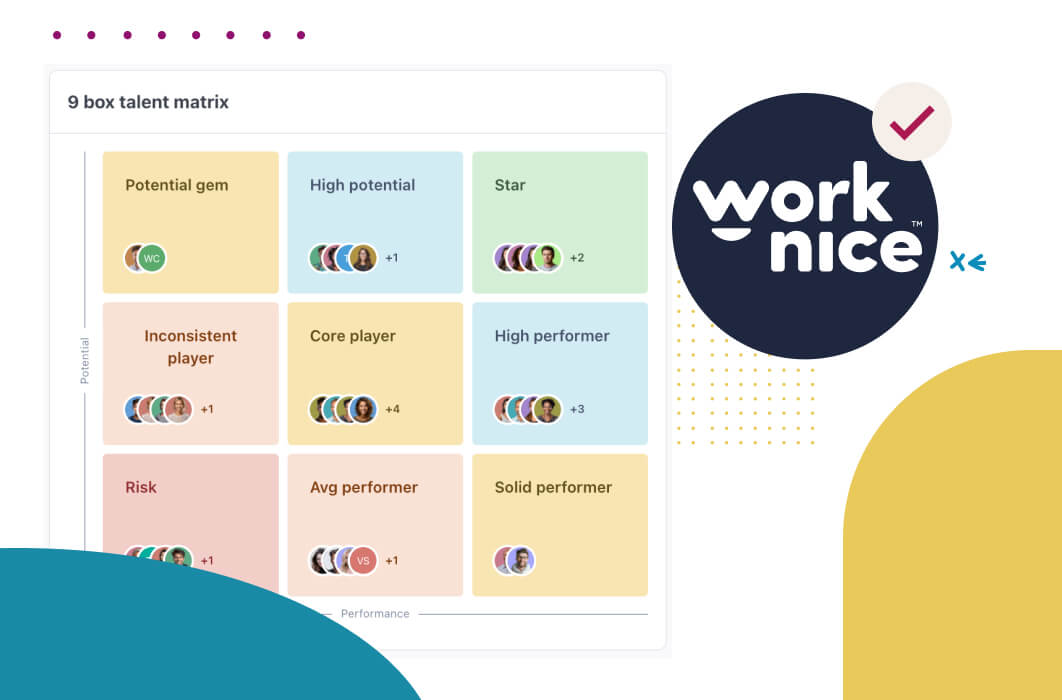
- The 9 box talent matrix explained: how to plot performance against potential and run a calibration that drives development rather than bias.
Sources
- Gallup. “How Fast Feedback Fuels Performance.” https://www.gallup.com/workplace/357764/fast-feedback-fuels-performance.aspx
- Gallup. “Give Performance Reviews That Actually Inspire Employees.” https://news.gallup.com/opinion/gallup/219863/give-performance-reviews-actually-inspire-employees.aspx
- G2. “Worknice Reviews.” https://www.g2.com/products/worknice/reviews
- Capterra Australia. “Worknice Cost & Reviews.” https://www.capterra.com.au/software/208362/worknice