An HR onboarding platform coordinates every step of bringing a new hire on board: contracts, forms, day-one tasks, IT setup, and compliance. It replaces scattered checklists and email with one workflow that HR, managers, and IT all share. Because only 12% of employees say they are onboarded well, the platform’s job is to make a good first experience repeatable at scale.
Last updated 24 September 2026.
Key takeaways
- An HR onboarding platform coordinates HR, managers, and IT around one shared workflow for each new hire.
- According to Gallup, only 12% of employees strongly agree their organisation onboards new hires well.
- A good platform covers contracts, pre-boarding, task assignment, compliance capture, and payroll sync.
- Platforms work best inside the HRIS, because the new starter’s record then flows into your system of truth.
- Adoption decides value, so ease of use for managers and new hires matters more than feature count.
What is an HR onboarding platform?
An HR onboarding platform is software that manages the whole new-hire journey in one place. It sends contracts, collects details, assigns tasks to the right owners, triggers IT and equipment setup, and captures compliance items. As a result, onboarding follows a consistent, trackable process rather than a manual checklist that lives in someone’s head.
The word “platform” matters, because onboarding is a team effort. HR, the hiring manager, IT, and payroll all play a part, and a platform coordinates them. When these steps live in an employee onboarding platform, nothing falls through the cracks. When they live across email and spreadsheets, new starters arrive to missing logins, no desk, or unsigned paperwork. So the platform is really a coordination layer, not just a form-filler.
Why do mid-sized companies need an onboarding platform?
Mid-sized companies need a platform because hiring becomes constant, and manual onboarding stops scaling. Below about 50 employees, a careful checklist can cope. Between 100 and 1,000 employees, though, onboarding happens most weeks, so the cracks in a manual process show quickly. A platform makes a good experience repeatable, no matter how many people you hire. First, though, it helps to know whether mid-sized companies need onboarding software at all.
The stakes are high, because the first weeks shape retention. According to Gallup, only 12% of employees strongly agree their organisation does a great job onboarding. That gap is expensive, since weak onboarding drives early turnover, and replacing a person often costs around half their salary. So a consistent platform is a retention tool, not just an admin one.
Consistency also protects your brand and compliance. A polished, digital onboarding experience signals a well-run organisation to every new hire. Meanwhile, capturing policy acknowledgements and right-to-work checks at hire builds your compliance evidence from day one. So the platform serves the new starter and the business at the same time.
What should an HR onboarding platform include?
A strong platform includes five things. First, offers and contracts with e-signature. Second, pre-boarding, so new starters complete forms before day one. Third, task assignment and tracking across HR, IT, and the manager. Fourth, compliance capture, such as policies and qualifications. Finally, a payroll sync that moves the new hire’s details into your existing payroll.
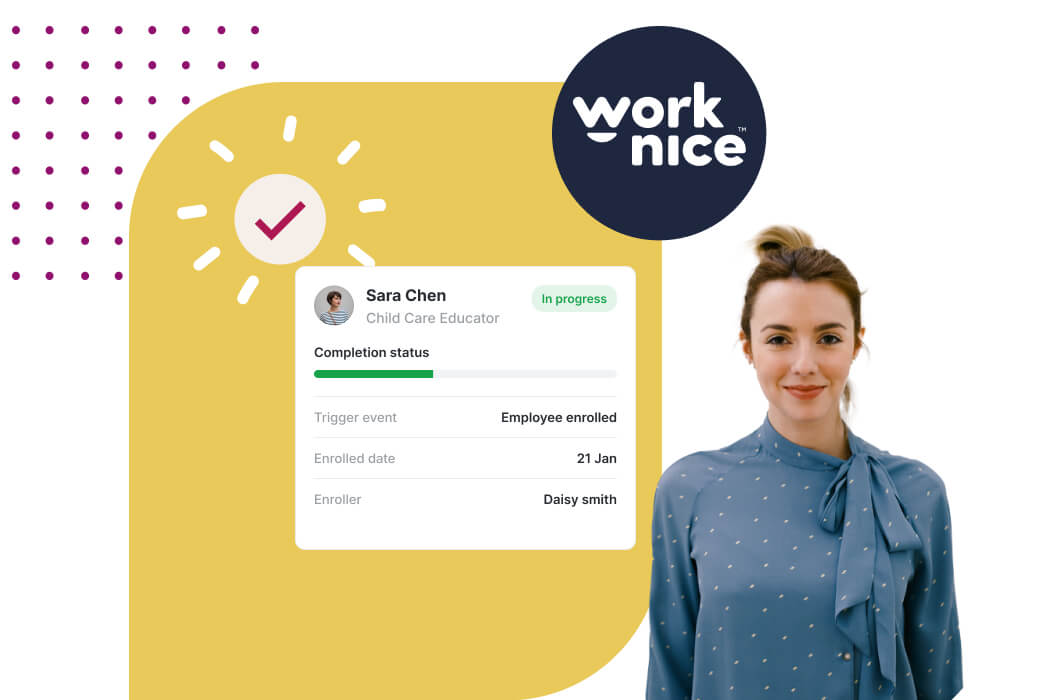
Task coordination is the core capability. A good platform turns a signed contract into a chain of tasks, each with an owner and a due date, and it chases anything that stalls. This is really automated onboarding workflows applied to the new-hire journey. So HR stops manually nudging five people and instead manages a process that drives itself to completion.
The other essentials are structure and evidence. A new hire onboarding checklist built into the platform makes each step explicit and trackable. Compliance capture then ties policies and certificates to the person, which connects to your broader compliance and records. As a result, the platform delivers both a smooth experience and a defensible audit trail.
Standalone onboarding platform or part of your HRIS?
For most mid-sized companies, an onboarding platform built into the HRIS beats a standalone app. The reason is data. A standalone tool runs a nice welcome experience, but it often leaves the new starter’s record in a separate silo. When onboarding lives in the HRIS, the record flows straight into your single source of truth, ready for leave, compliance, and reporting.
Standalone platforms can suit organisations that want a best-in-class welcome experience and already accept another integration. However, that path means syncing data between systems and maintaining another vendor. For a business between 100 and 1,000 employees, the built-in approach usually wins, because it keeps people data unified. This is a core reason mid-market teams choose a full HRIS for mid-sized companies rather than a single-purpose onboarding app.
The honest trade-off is polish versus unity. A dedicated tool may offer a slightly slicker candidate experience. For most mid-market teams, though, onboarding inside the HRIS delivers a great experience and keeps the data connected, which matters more over time.
How do you choose an HR onboarding platform?
Choose for adoption, integration, and compliance fit. Adoption comes first, because a platform that managers and new hires find clunky simply gets bypassed. So test the manager and employee experience during evaluation, not just the admin view. If a task takes five clicks or a login people forget, onboarding will drift back to email.
Integration is the second test. The platform must sync with your existing payroll and connect to your other tools, so the new starter’s data flows without re-keying. Ask how it handles payroll integration with systems like Xero, MYOB, MicrOpay, or KeyPay. A platform that syncs cleanly saves hours per hire and removes a common source of first-pay errors. Since Payday Super started on 1 July 2026, a new starter’s first super contribution is due within 20 business days after payday, so the fund details captured at onboarding need to reach payroll correctly the first time.
Compliance fit is the third, especially in Australia. A platform should capture the local items a new hire needs, from policy acknowledgements to right-to-work checks. This is where onboarding software built for Australia matters, because it handles Fair Work requirements as part of the flow rather than as an afterthought.
Why is Worknice a strong HR onboarding platform?
Worknice is an Australian next-gen HRIS with a configurable onboarding platform at its core. A signed contract can create the employee record, assign tasks to HR, IT, and the manager, capture policy acknowledgements, and sync the new starter to payroll. Reviewers rate it 4.9 out of 5 on G2 and 5 out of 5 on Capterra, and they often mention how fast teams adopt it.
The review detail matters. On G2, Worknice holds 4.9 out of 5, where reviewers praise how quickly new starters and staff pick it up. On Capterra it rates 5 out of 5, with 99% of reviewers recommending it. Because a platform only helps when people actually use it, that ease of use is the point, not a soft extra.
A fair caveat: Worknice syncs new starters into your existing payroll rather than running pay itself. So employee details flow to your payroll engine through a two-way integration, and payroll stays the source of truth for pay. Most mid-market teams prefer this split. You can see the onboarding platform in a free demonstration.
Frequently asked questions
What is an HR onboarding platform?
An HR onboarding platform is software that manages the whole new-hire journey in one place. It sends contracts, collects details, assigns tasks across HR, IT, and the manager, captures compliance items, and syncs the new starter to payroll. As a result, onboarding follows a consistent, trackable process rather than a manual checklist spread across email and spreadsheets.
What is the difference between an onboarding platform and onboarding software?
The terms overlap and are often used interchangeably. “Onboarding software” describes the tool broadly, while “platform” emphasises how it coordinates HR, managers, and IT around one shared workflow. In practice, look past the label and check that the tool covers contracts, pre-boarding, task tracking, compliance capture, and payroll sync, and that it integrates with your wider HR stack.
Should an onboarding platform be part of the HRIS?
For most mid-sized companies, yes. A standalone platform runs a nice welcome experience but often leaves the new starter’s record in a separate silo. When onboarding lives in the HRIS, the record flows straight into your single source of truth, ready for leave, compliance, and reporting. That keeps data unified and avoids another integration to maintain.
How does an onboarding platform improve retention?
It improves retention by making the first weeks structured and welcoming. According to Gallup, only 12% of employees strongly agree they are onboarded well, and weak onboarding drives early turnover. A platform delivers a consistent experience every time, covering tasks, introductions, and compliance, so new hires settle faster and are more likely to stay.
What should you look for when choosing an onboarding platform?
Prioritise adoption, integration, and compliance fit. Adoption matters most, because a clunky platform gets bypassed, so test the manager and new-hire experience. Check that it syncs with your existing payroll and connects to your tools. Finally, confirm it captures local compliance items, which in Australia means Fair Work requirements handled as part of the onboarding flow.
About the author
Graham Martin is a co-founder of Worknice, an Australian next-gen HRIS. Since 2021 he has worked with hundreds of Australian HR leaders and people teams. He helps mid-sized organisations replace manual onboarding with a coordinated, compliant platform.
Related reading
- Do mid-sized companies need onboarding software: when hiring volume makes onboarding software worth it, and what it should do.
- Sample employee onboarding process map: a free process map to help you lay out each onboarding step and owner.
- Does a contract need a signature: how a new hire can accept an employment contract in Australia, and what record of acceptance to keep.
Sources
- Gallup. “Why the Onboarding Experience Is Key for Retention.” https://www.gallup.com/workplace/235121/why-onboarding-experience-key-retention.aspx
- Australian Bureau of Statistics. “Job mobility, February 2026.” https://www.abs.gov.au/statistics/labour/jobs/job-mobility/latest-release
- G2. “Worknice Reviews.” https://www.g2.com/products/worknice/reviews
- Capterra Australia. “Worknice Cost & Reviews.” https://www.capterra.com.au/software/208362/worknice